
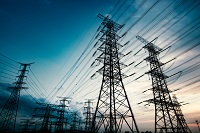
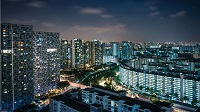




From air-conditioning and induction stoves to digital services and electric vehicles, electricity is the backbone of our daily lives. As more activities shift towards electrification, energy demand continues to rise even as the nation pushes towards its net-zero goal by 2050.


- About EMA
- Our Energy Story
- Consumer Information
- Regulations & Licences
- News & Events
- Partnerships
eSERVICES
Get quick access to EMA’s services for application of worker licences, scholarships and more.
Featured Stories
19 Feb 2026
Share


These pressures mean one thing: Singapore’s energy sector must be ready for major change, Energy Market Authority (EMA) Chief Executive Puah Kok Keong said.
“There’ll be new energy technologies, new jobs, and new skill sets needed,” he said. “The workforce will have to transform. Companies will need to pivot,” he added.
It is a long journey ahead, filled with unknowns. Yet Kok Keong remains optimistic.
“Some people see uncertainty as frightening,” he shared. “But I see uncertainty as opportunity.”
Reflecting on his first year at the helm of EMA, Kok Keong believes that Singapore’s energy transition is progressing well – guided by three core principles: keeping energy reliable and affordable, steadily reducing carbon emissions, and preparing early for future energy technologies.
Keeping the Lights on – Without Breaking the Bank
As Singapore's energy needs grow, Kok Keong's top priority is ensuring that the power system remains dependable and affordable for everyone.
“We must continue to make sure the grid stays reliable, and that costs remain affordable for households and businesses,” he emphasised.
Natural gas will continue to play a central role in maintaining this balance. In 2025, EMA established GasCo to help aggregate gas demand across generation companies and engage suppliers on behalf of the power sector.
“The aim is to secure more diversified sources of natural gas and strengthen our bargaining position,” Kok Keong explained. GasCo has since completed its initial setup and is now fully operational.
Another key focus is ensuring gas infrastructure can meet future demand. Singapore is developing a second LNG terminal, which will be a floating storage and regasification unit (FSRU) coupled with an onshore connecting infrastructure. Expected to be ready by 2030, the second LNG terminal will increase Singapore’s LNG capacity by 50%.

Going Green, Step by Step
The second pillar of Singapore's energy strategy is reducing carbon emissions in a steady and pragmatic way.
At home, solar power remains the cornerstone of clean energy efforts. EMA has a single-minded approach: install solar panels wherever it is technically possible.
“Our aim is to try to maximise every available space that is suitable for solar panels. Every available rooftop, every unused space, on reservoirs, and even on the sea,” he said.

These efforts have put Singapore on track to meet its target of 2-gigawatt (GW) peak of solar by 2030.
Still, Singapore’s domestic renewable energy potential is limited by land constraints. “But in the region, there’s plenty of it,” Kok Keong pointed out. “You need land and sunshine, and our neighbours have that.”
This makes importing low-carbon electricity from neighbouring countries a vital part of the transition plan. Singapore aims to import up to around 6GW of electricity from the region by 2035.
EMA has already issued conditional approvals for more than 8 GW of potential energy imports.
Given the technical, regulatory and financing complexities involved, Kok Keong acknowledged that progress will vary. “Some projects may move faster, others may take more time,” he said. Approving more capacity upfront provides flexibility as different projects advance at different speeds.
EMA expects several projects to reach key milestones this year, including securing project financing and achieving final investment decision, as developers firm up their plans.
Preparing for Tomorrow’s Energy
The third pillar is about readiness – building the expertise needed to adopt new energy technologies when they become viable.
One technology under study is carbon capture and storage (CCS), which could help reduce emissions from power generation and industrial activities. However, CCS depends on infrastructure beyond Singapore, including cross-border transport and long-term carbon storage.
To better understand how such systems work in practice, Kok Keong and team visited the Northern Lights project in Norway – one of the world’s first cross-border CCS initiatives.

“We’ve seen that it’s technically possible,” he said. “What we wanted to examine was the regulatory, technical and commercial feasibility — from regulatory frameworks to developer considerations, and the economics of operating such a facility,” he added.
EMA is also studying other future low-carbon energy options. Following encouraging research findings, non-invasive geophysical surveys have begun to better assess Singapore’s geothermal energy potential.
While no decision has been made on nuclear energy, Singapore continues to participate in regional discussions on nuclear safety and governance. At the same time, EMA is strengthening internal expertise to evaluate advanced nuclear technologies, including small modular reactors.
“When the technology matures, we want to be able to more thoroughly assess nuclear energy’s suitability for Singapore,” Kok Keong said. Preparedness, he added, allows Singapore to act decisively when conditions are right.
An Exciting Road Ahead
As EMA marks its 25th anniversary this year, Kok Keong sees the energy transition not as a challenge, but an opportunity.
To him, this milestone is an opportunity to engage the public on how energy systems are evolving, to rally staff around a shared mission, and to showcase the energy sector as a meaningful and future-ready career path for younger Singaporeans.
When asked how he feels about the road ahead, Kok Keong’s answer was simple.
“I would use the word ‘exciting’,” he said. “There are many interesting projects we can embark on to harness new energy sources. If we succeed, we will be able to continue to deliver reliable, secure and affordable energy to Singaporeans in a way that is compatible with our climate goals.”
Enjoyed this read?
Join our EMA website mailing list here to receive the latest stories and updates directly to your inbox. Stay informed about recent developments and content from EMA.