







For more information, please refer to:


- About EMA
- Our Energy Story
- Consumer Information
- Regulations & Licences
- News & Events
- Partnerships
eSERVICES
Get quick access to EMA’s services for application of worker licences, scholarships and more.
Media Releases
26 Oct 2026
Share


- With Singapore’s electricity demand expected to grow rapidly in the coming years, the Energy Market Authority (EMA) will embark on a five-year Energy Infrastructure Plan to meet the demand growth reliably and with resilience. The plan outlines Singapore’s upcoming infrastructure developments encompassing power generation, natural gas, electricity grid, solar deployment, energy storage, and low-carbon electricity imports.
- As at August 2026, Singapore’s peak electricity demand was 8.6 gigawatts (GW). By 2031, peak demand could reach between 9.9 GW and 13 GW. This increase will mainly be due to new demand from energy-intensive sectors such as semiconductor manufacturing and data centres, as well as wider use of electric transport. The pace of demand growth will depend on when these new developments come onstream.
- Between 2026 and 2031, five new natural gas-fired power plants will be operational, which will expand Singapore’s electricity generation capacity by around 26%, from around 12 GW today. EMA is currently evaluating proposals from the Request for Proposal (RFP) which closed in September 2026 for additional natural gas-fired power plants that will be operational by 2032.
- Should electricity demand growth continue to be strong, EMA will launch additional RFPs over the next five years to ensure sufficient power generation capacity to meet Singapore’s future electricity needs.
- To meet longer-term power demand, Singapore is also studying the feasibility of establishing a new energy cluster at Pulau Tekong where new energy infrastructure such as hydrogen-ready natural gas-fired power plants, a liquefied natural gas (LNG) terminal, and other low-carbon energy technologies would be explored and integrated.
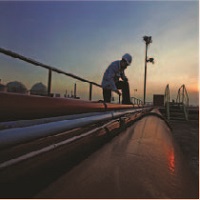
- Today, natural gas contributes around 95% of Singapore’s electricity needs. To meet greater demand for electricity and strengthen energy security, Singapore will increase its liquefied natural gas (LNG) regasification capacity from 10 million tonnes per annum (Mtpa) to 15 Mtpa when the second LNG terminal at Jurong Port is operational by 2030. Further expansion of the first LNG terminal at Jurong Island is also being studied. Coupled with expansion of Singapore’s natural gas transmission network, our gas supply system will be poised to serve existing and new power plants reliably and with resilience.
- Singapore’s electricity transmission and distribution network, such as substations and electricity cables, must also be expanded over time to support growing electricity needs. To this end, Singapore is projected to invest up to $5.3 billion between 2025 and 2029 to expand the power grid, which is 11 times the investments over the preceding five years. These investments will support:
- Building seven new transmission substations by 2031, up from four in the previous five years.
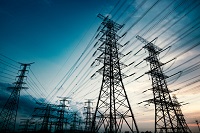
- Expanding the transmission cable network, which carries large amounts of electricity at high voltage from power plants to different parts of Singapore, from around 7,700 km today to approximately 9,100km by 2030.
- Strengthening the distribution network, which comprises lower-voltage substations and electricity cables that deliver electricity to consumers across homes, industries and organisations. This will strengthen the grid’s capacity to support new sources of supply and demand, such as solar panels and electric vehicle (EV) charging.
- To support longer-term transmission needs as electricity demand grows, Singapore is studying the feasibility of more than tripling the length of Singapore’s cable tunnels, from about 50 km today. These cable tunnels will allow for faster expansion of the grid, easier access to electricity cables for maintenance, and lower frequency and duration of road works for grid upgrades, such as laying new cables. The extended network will also support areas with strong demand growth, such as Tampines Wafer Fab Park.
- As part of efforts to maximise domestic solar deployment and diversify Singapore’s energy supply, more solar capacity will be added to reservoirs, vacant land sites and building rooftops. Singapore has achieved 2.3 GWp of solar capacity today and is well on track to meet its solar target of deploying 3 GWp of solar by 2030. As a next step, Singapore will push towards an expanded solar deployment target of 4 GWp by 2035.
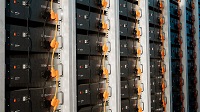
- To strengthen the resilience of the power system as Singapore integrates more diverse and variable energy sources, Singapore also aims to increase its energy storage capacity from around 350 megawatt-hour (MWh) today to just over 1 GWh by 2030. Energy storage systems (ESS) can strengthen system reliability and stability by responding quickly to disruptions and balancing fluctuations in supply and demand. ESS can also help to manage temporary network constraints by storing electricity when spare network capacity is available and discharging during peak demand, while network upgrades are underway.
- To facilitate the flow of low-carbon electricity imports to meet our ambition, Singapore will progressively develop sufficient electricity import landing sites to connect subsea cables to Singapore’s power grid.
- Detailed feasibility studies for a second electricity interconnection between Singapore and Peninsular Malaysia are underway. If realised, the interconnector could support up to 2 GW of capacity by 2030, complementing the existing link which allows up to 1 GW of bi-directional electricity flows.
- Singapore will continue to monitor electricity demand and review its energy infrastructure plans based on evolving needs, to ensure that the power system remains reliable and resilient even as demand grows.
New Electricity Generation Capacity
Strengthening Singapore’s Natural Gas Infrastructure
Expanding the Power Grid
Growing Solar Capacity
Increasing Energy Storage Capacity
Supporting Electricity Imports